Perimenopause symptoms
Recognising changes without jumping to conclusions
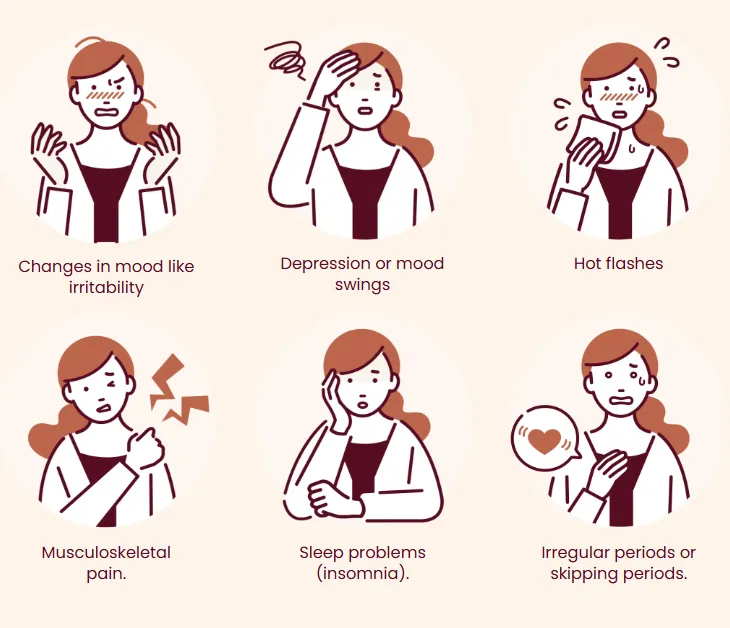
Perimenopause can involve changes in periods, hot flashes, night sweats, sleep difficulties, mood and concentration. Headaches, muscle aches and joint pain may also occur. Experiences vary: some people have few symptoms, while others find daily life substantially affected. NHS: Symptoms of menopause and perimenopause.
A symptom list is a starting point for conversation, not a diagnosis. You do not have to recognise yourself in every description for your concerns to deserve attention.
Make your experience easier to describe
When preparing for an appointment, it can help to organise your own observations:
What changed, and when did you first notice it?
Is it occasional, frequent or present most days?
What has changed in your bleeding pattern?
How does it affect sleep, work, relationships or activities?
What would you most like help with?
Use your own words. “I keep waking up and cannot function comfortably the next day” may communicate the effect more clearly than a long list of technical terms.
Sleep, mood and concentration
The NHS notes that poor sleep and tiredness can make mood and concentration difficulties feel worse. Night sweats can also disrupt sleep. NHS symptom guidance.
It is worth recording the impact as well as the symptom itself. You may want to discuss the part that is most disruptive first, rather than trying to explain every change at once.
Changes in bleeding deserve attention
Periods may become irregular, lighter or heavier during the transition. The NHS advises seeking medical advice for increasing bleeding and for any vaginal bleeding after twelve months without a period. NHS guidance on bleeding.
Do not dismiss a change simply because it appears on a menopause symptom list. A healthcare professional can help assess what it means in your circumstances.
Your questions belong in the conversation
You can ask what possible explanations are being considered, what assessment is appropriate and what options could address the changes that matter most to you. Bring a short record if you find that useful; it does not need to be perfect.
SaHera’s educational content aims to make these conversations easier. It does not replace an individual assessment or establish a diagnosis.
For a more detailed appointment guide, read Is it perimenopause? What to discuss at your appointment.
English adaptation of Perimenopause symptoms — French archive, originally written by Cécilia CHEROUX. Updated by SaHera Editorial on 21 September 2026 with AI-assisted translation and editing. This edition updates or removes unsupported statements in the archive. Educational content; not individual medical advice.
Linked reference material checked on 21 September 2026.
